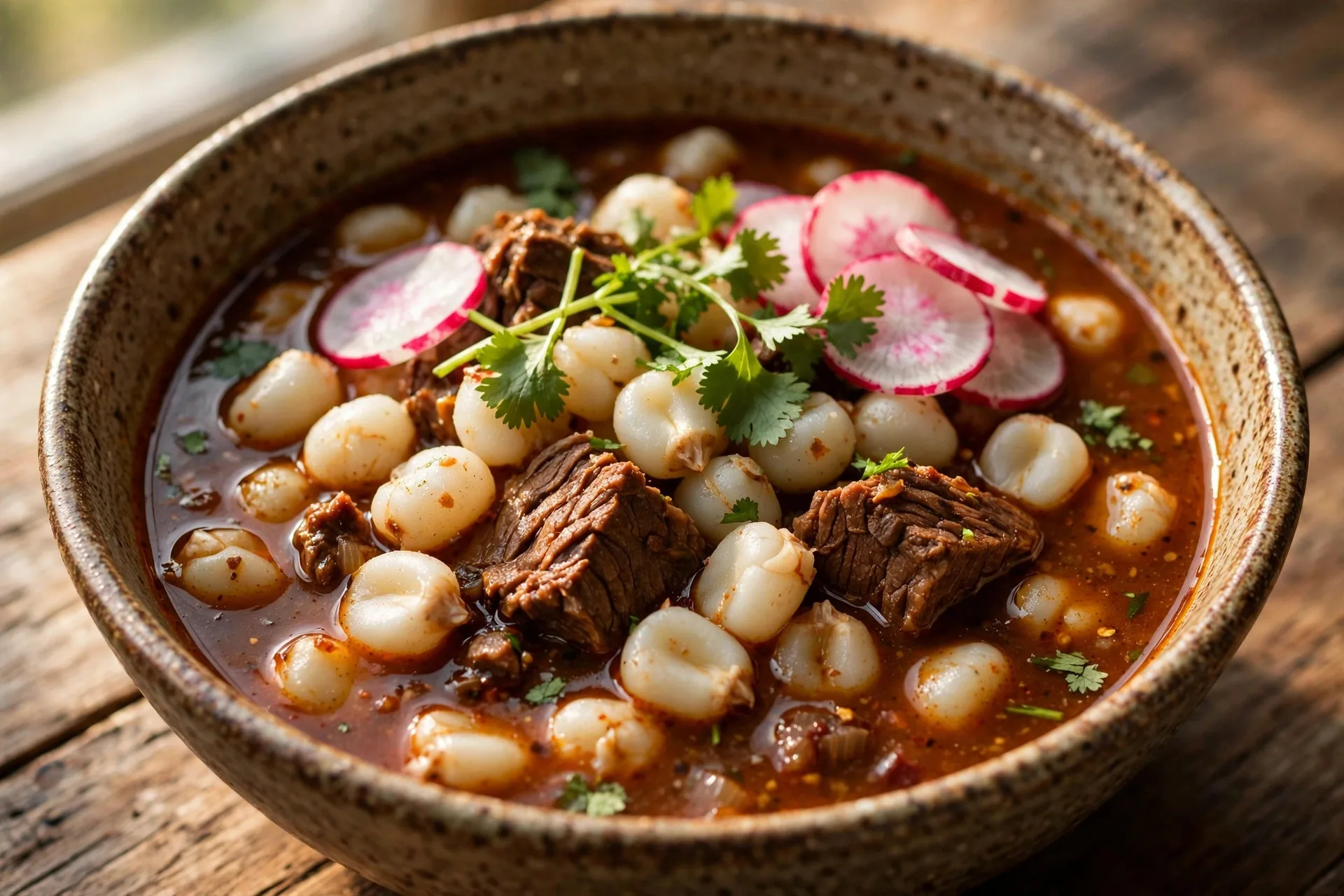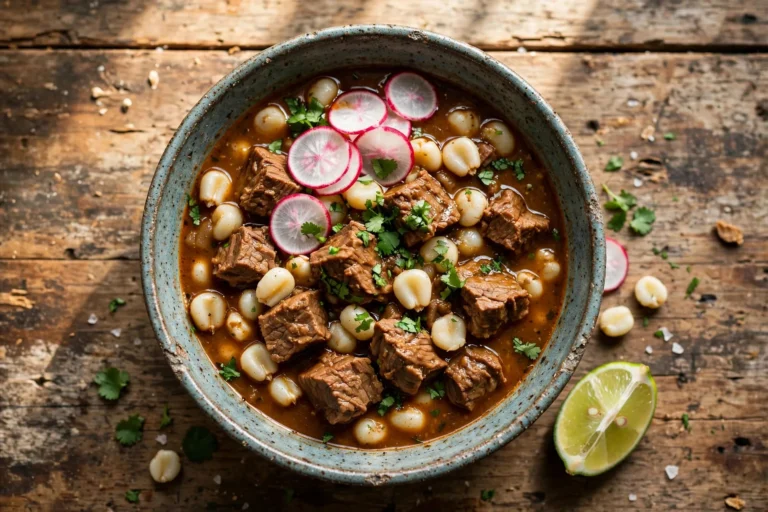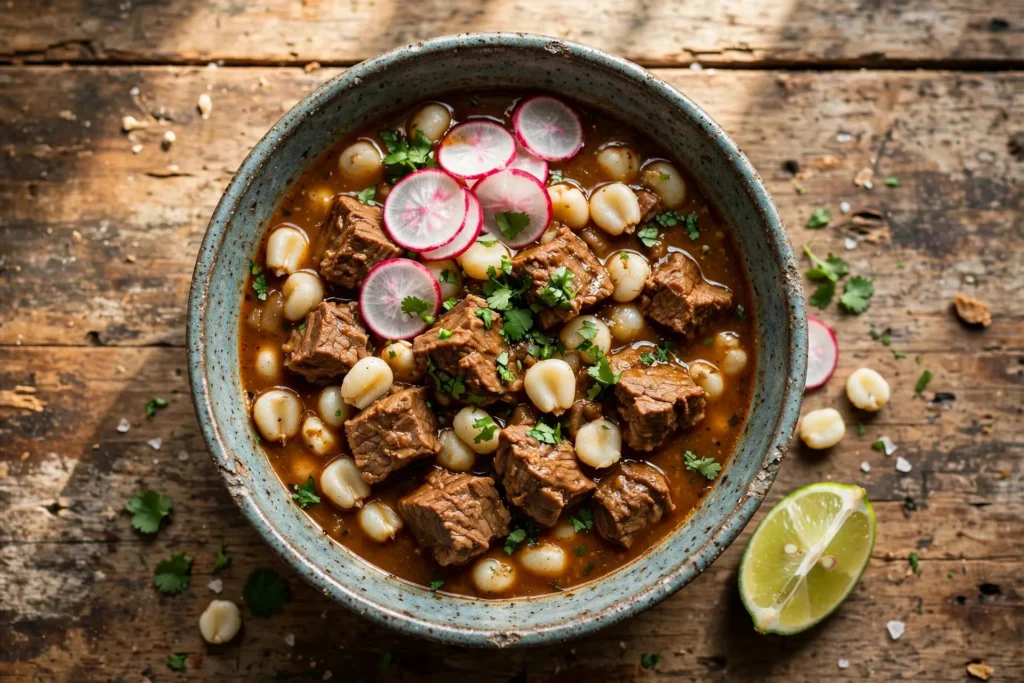
Beef posole makes a cold evening feel easy: tender beef and chewy hominy in a rich, savory broth that tastes slow-cooked all day — though the pressure cooker does the work in about 90 minutes.

Why You’ll Love This Recipe
- The pressure cooker turns tough stew meat meltingly tender in 45 minutes.
- Dried posole costs little and gives the stew its signature chewy, nutty bite.
Recipe Quick Overview
| Prep | Cook | Total | Servings | Calories |
|---|---|---|---|---|
| 15 minutes | 1 hour 10 minutes | 1 hour 25 minutes (+ overnight soak) | 6 | About 330 per serving |
Ingredients
- 1 cup dried posole (hominy), about 180 g — soaked overnight in water
- 2 lb beef stew meat (about 900 g), cut into 1-inch cubes
- 2 tablespoons vegetable oil, for browning
- 6 cups water (about 1.4 liters)
- 1/4 teaspoon baking soda
- 2 teaspoons fine sea salt, plus more to taste
- 2 teaspoons dried ginger (optional)
- 2 teaspoons dill weed (optional)
- 2 teaspoons onion powder (optional)
- 2 tablespoons white masa harina, for the thickening slurry
- 1/4 cup cold water, for the slurry
- Optional stir-ins: 2 cups cooked white rice or gluten-free pasta, chopped carrots, zucchini, or potatoes
- For serving: chopped fresh cilantro, sliced radishes, lime wedges
A word on the ingredients: dried posole is hominy — corn treated with an alkaline solution so the kernels puff up tender and chewy; find it in the dried-beans aisle. Stew meat is usually chuck, which turns silky under pressure, while lean beef dries out. The baking soda softens the posole and relaxes the beef — do not skip it.
How to Make Beef Posole Stew with Hominy: Step by Step
Step 1: Soak the Dried Posole Overnight
The night before, put the dried posole in a large bowl and cover it with at least 2 inches of fresh water. Leave it on the counter for 8 to 12 hours. By morning the kernels look plump and a little split — exactly what you want.

Step 2: Brown the Beef in Batches
Drain the soaked posole and set it aside. Pat the beef cubes dry — wet meat steams instead of browning. Set the cooker to sauté on high and add the oil. When it shimmers, brown the beef in two batches, 4 to 5 minutes each, turning so every side picks up a deep brown crust. Do not crowd the pot — and leave the browned bits on the bottom; they are pure flavor.

Step 3: Load the Pressure Cooker
Turn off sauté. Return the beef, then add the drained posole, 6 cups of water, the baking soda, 2 teaspoons of salt, and your optional spices. Pour the water over the sides to loosen the browned bits — that is called deglazing, and it stops the cooker throwing a burn warning. For very soft vegetables, add chopped carrots, zucchini, or potatoes now.

Step 4: Pressure Cook for 45 Minutes
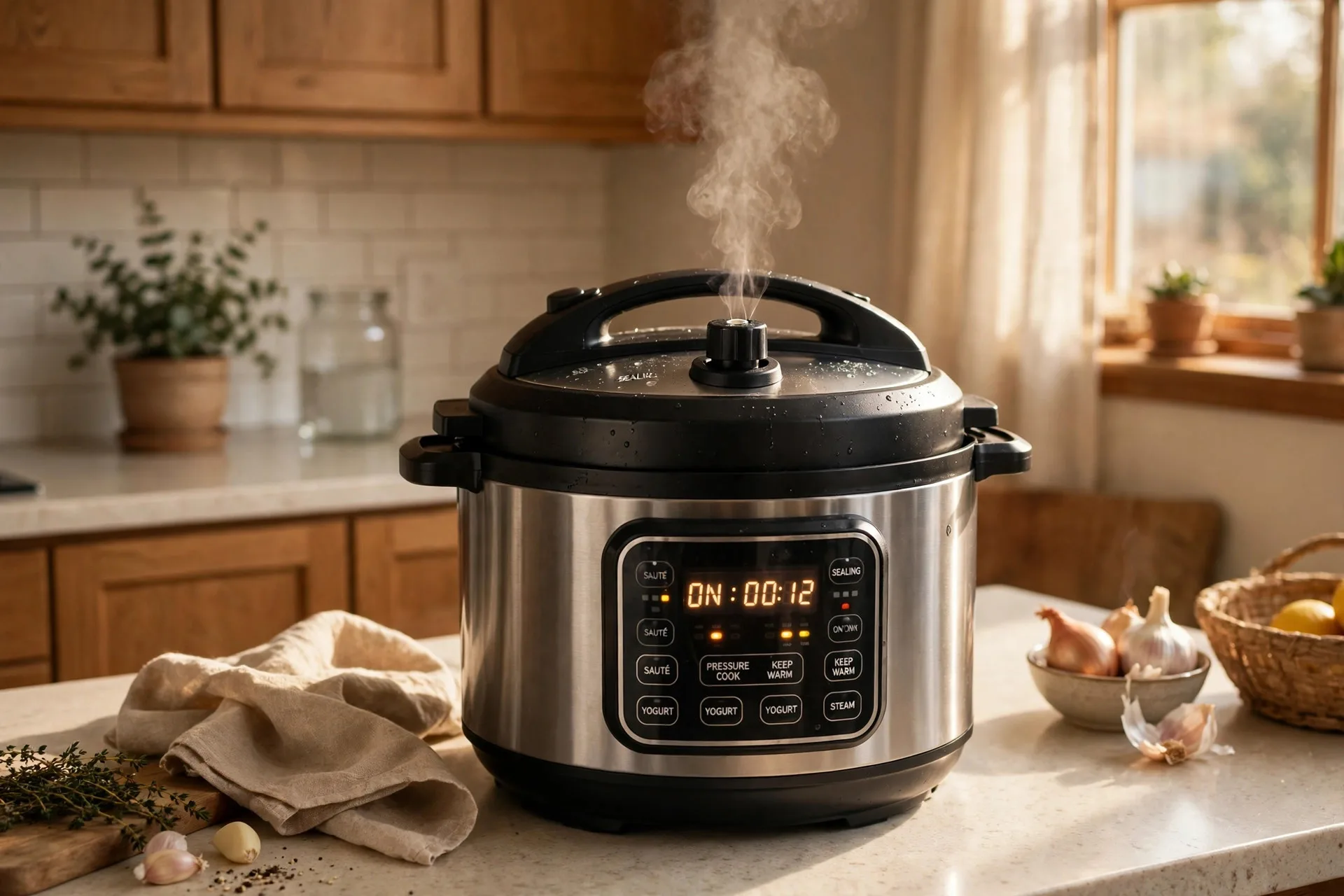
Lock the lid, set the valve to sealing, and cook on high pressure for 45 minutes. When the timer ends, let the pressure release naturally for about 15 minutes — do not touch the valve. Natural release keeps the beef tender and the hominy chewy instead of burst. Then vent any pressure left and open the lid away from your face. The beef should shred easily with a fork, and the posole should be plump with a slight chew.
Step 5: Thicken with a Masa Slurry and Cut the Beef
For a thicker broth, stir 2 tablespoons of white masa harina into 1/4 cup of cold water until smooth, then pour the slurry in — always mix masa with cold water first, or it clumps. Turn sauté back on and simmer 3 to 5 minutes, stirring, until the broth coats the back of a spoon. Cut the beef into bite-sized pieces right in the pot; kitchen scissors are faster than a knife. Taste and add salt if it needs it.

Step 6: Stir in the Extras and Serve
Stir in your cooked rice, gluten-free pasta, or pre-cooked vegetables and warm through for 2 minutes. Taste once more — a pinch of salt or a squeeze of lime wakes the whole pot up. Ladle into deep bowls, top with cilantro, radishes, and lime wedges, and serve hot.

Tips for the Best Results
- Dry beef browns, wet beef steams — pat the cubes dry and brown in batches, or you lose the deep flavor.
- Keep the pot below the two-thirds fill line — hominy swells as it cooks.
- Season in two rounds — 2 teaspoons of salt at the start, then adjust at the end, as salt concentrates while the broth reduces.
Common Mistakes to Avoid
- Skipping the overnight soak. Unsoaked posole stays hard in the middle even after 45 minutes at pressure.
- Adding the masa straight to the pot. Dry masa clumps on contact with hot broth — always whisk it into cold water first.
- Quick-releasing the pressure. A fast release can toughen the beef and burst the hominy — allow the full 15 minutes.
- Using wheat pasta in a gluten-free stew. If you stir pasta in, it must be certified gluten-free.
What to Serve With

Serve in deep bowls, toppings set out like a little bar — radishes for crunch, cilantro for freshness, lime wedges for brightness. Warm corn tortillas or gluten-free bread mop up the broth. Another hearty pot never hurts: our Cowboy Soup is another beefy bowl that cooks the same easy way, and Hamburger Green Bean Casserole with Mushrooms makes a fine partner on a busy weeknight.
Storage and Reheating
Store leftovers airtight in the refrigerator for up to 4 days — the flavors deepen overnight, so day two is often the best bowl. Reheat gently on the stovetop, adding a splash of water if the broth has thickened. To freeze, cool completely and freeze in portions for up to 3 months; thaw overnight in the refrigerator.
Make-Ahead
The overnight soak is the only real advance work — do it up to 24 hours ahead. The finished stew also holds beautifully: cook it a day early and reheat gently. Double it only in an 8-quart or larger cooker.
Nutrition Facts
- Serving size: about 1 1/2 cups
- Calories: about 330 (estimate)
- Protein: about 30 g (estimate)
- Carbohydrates: about 28 g (estimate)
- Fiber: about 5 g (estimate)
- Fat: about 13 g (estimate)
- Saturated fat: about 4 g (estimate)
- Sodium: about 800 mg (estimate)
- Sugar: about 1 g (estimate)
- Cholesterol: about 80 mg (estimate)
All figures are estimates.
Frequently Asked Questions
Can I use canned hominy instead of dried posole? Yes — use two 15-ounce cans of white hominy, drained and rinsed, and cut the pressure-cooking time to 25 minutes, skipping the overnight soak. The texture will be softer and less chewy than dried posole.
How long do I soak dried posole? Soak it overnight, 8 to 12 hours, covered with at least 2 inches of water. Short on time? Cover the kernels with boiling water and let them stand for 2 hours instead.
Can I make it in a slow cooker? Yes. Brown the beef first, then add everything except the slurry. Cook on low for 7 to 8 hours or on high for 4 to 5 hours, until the beef shreds and the posole is tender, stirring in the slurry for the last 30 minutes on high. If you like slow-cooker dinners, our Slow Cooker Balsamic Cranberry Chicken is another set-it-and-forget-it favorite.
Is posole gluten-free? Yes — posole itself is just corn, beef, water, and spices. The claim only breaks if you stir in wheat pasta or a thickener with gluten, so stick to white masa harina and gluten-free pasta or rice.
Why add baking soda? It raises the pH of the cooking water slightly, softening the posole and relaxing the beef. Just 1/4 teaspoon is enough; more can taste soapy.
Can I freeze it? Absolutely — cool completely, freeze in portions for up to 3 months, and thaw overnight in the refrigerator, stirring in freshly cooked rice or pasta after reheating.
What is the difference between pozole and posole? Nothing but spelling — the same Mexican hominy stew, spelled two ways in different regions. If you like the green version too, try our Chicken Pozole Verde with Hominy, a bright tomatillo-based chicken stew made the same comforting way.
Final Thoughts
This stew rewards a little patience and repays it many times over. The soak and the 45 minutes at pressure do the hard work; the browning makes the broth taste slow-simmered. Make it once, and it will join your regular rotation of easy dinner recipes.